Project Zero
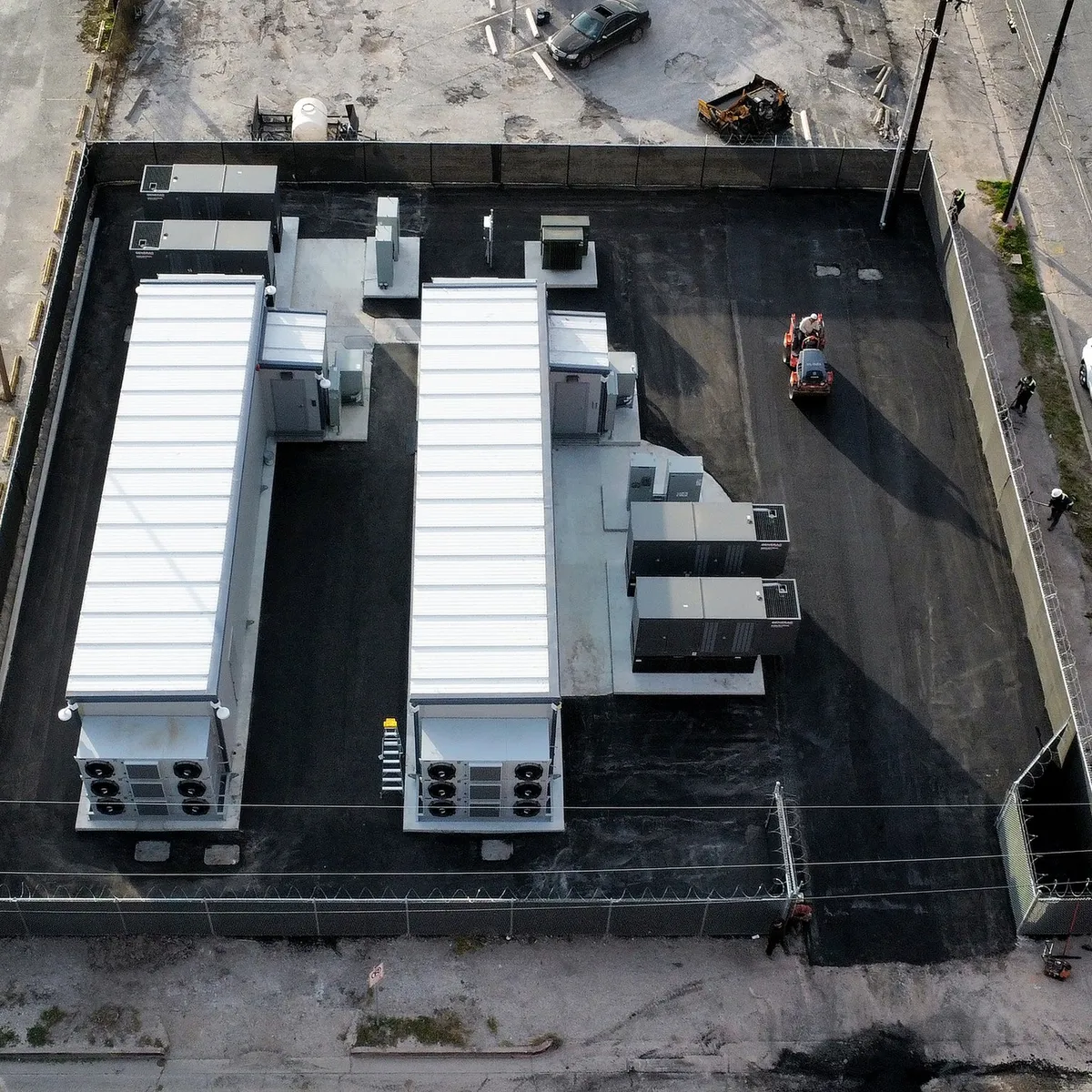
Project Zero is ZeroPoint’s distributed AI infrastructure initiative: a modular, vendor-agnostic micro data center system built by Kaufman Development to bring low-latency, locally deployed compute to the edge — proved out with the platform's first prototype deployment in Detroit.
OVERVIEW
A micro data center is a compact, self-contained infrastructure system designed for distributed environments where low latency, local compute, and rapid deployment are the priority. Project Zero is purpose-built for these edge deployments: a modular, vendor-agnostic system that puts the customer in control of how their edge is defined and scaled, rather than locking them into a single vendor's pre-specified hardware stack.
It meets the demand for a standardized, premium-quality, cost-competitive edge infrastructure system, and it is designed to deliver a reduced total cost of ownership of 20 to 30 percent.
At its core, Project Zero is a small-footprint, on-premises data center engineered for distributed and remote infrastructure environments. Its modular architecture includes white-glove installation and support, power, cooling, infrastructure conveyance, and containment, all housed within a pre-fabricated, factory-assembled modular room and shipped flat-packed to site.
- Developer
- Kaufman Development
- Location
- Detroit, Michigan
- System Type
- Modular, vendor-agnostic micro data center
- Status
- Prototype deployment
- Design Target
- 20–30% lower total cost of ownership
THE MARKET
Edge data centers are growing at an estimated 12 to 15 percent annually, driven by increasing requirements for real-time data processing, low latency, greater security, and automation. Project Zero is designed to meet that demand. Its customizable, modular design offers a fast, flexible, and easy-to-build micro data center system, perfectly suited for colocation, 5G, retail, enterprise, and industrial environments.
APPROACH
Project Zero's containment is built in and customizable, integrated with self-supporting ceiling modules and insert panels available in ABS, acrylic, polycarbonate, aluminum, or glass. The containment system separates cold supply air from hot exhaust air, reducing overall cooling requirements, lowering fan speeds, and enabling a higher degree of free cooling. Without it, operators face hot spots, lower kW-per-rack densities, and higher energy costs; with it, the result is a lower PUE (power usage effectiveness) and a longer mean time between failures for IT equipment.
Its flexible, vendor-agnostic design gives operators the ability to custom-specify their own choice of power and cooling infrastructure. This approach solves the challenge of inflexible, pre-specified systems found in standard containerized solutions, while retaining the ability to standardize, repeat, and scale quickly as business requirements change — supporting a variety of load requirements across different deployment environments.
BENEFITS
- Low latency processing at the point of use, ideal for IoT, 5G, and edge AI
- Real-time access to mission-critical data, applications, and services
- Fast deployment from factory-assembled, flat-packed components
- Easy to relocate for temporary or permanent applications
- Modular design scales as business requirements change
- Vendor-agnostic: specify your own power and cooling infrastructure
- Fully enclosed for physical security and safety
- Built to fit any existing warehouse or office space
STATUS
Project Zero is Kaufman Development's prototype deployment, built in Detroit to prove out the modular system end to end — from factory-assembled, flat-packed delivery through on-site installation and containment. The 20 to 30 percent total-cost-of-ownership reduction and the benefits above describe what the system is designed to deliver; they are the platform's design targets, not yet a measured result from a scaled deployment. As the prototype matures and Project Zero expands to additional sites, Kaufman Development will share what the Detroit deployment proves out in practice.