
The Lights Are Still On, But the Engine’s Barely Running
You don’t need a Bloomberg terminal to know something’s off in commercial real estate right now. Walk any major metro and you’ll see it: development pipelines thinning out, lenders sitting on the sidelines, and brokers chasing fewer—and slower—deals.
But how bad is it, really?
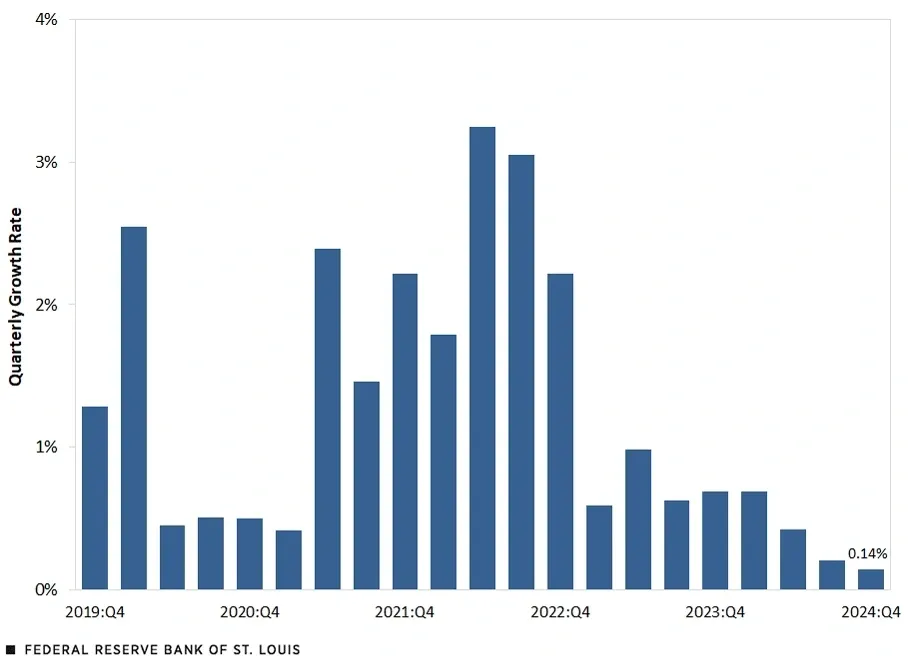
I like to zoom in on loan growth. It’s a clean, powerful signal. When developers are optimistic, banks lend. When banks lend, projects rise. So when that activity flatlines, it tells you all you need to know about the market’s pulse.
And in 2024, the pulse was barely there.
Here’s the yearly progression:
- 2020: 3.72% (Yes, during COVID)
- 2021: 6.60%
- 2022: 10.6%
- 2023: 3.14%
- 2024: 1.14%
That’s not a typo—loan growth in 2024 came in lower than during the heart of the pandemic.
There are some logical factors behind it. The 2021–2022 bull run likely pulled some demand forward. Equity-rich buyers have taken advantage of dislocated pricing without needing leverage. And with interest rates where they are, many projects simply don’t pencil.
But even accounting for those headwinds, the lack of velocity in the system is startling.
And here’s the kicker: even if lending turns back on tomorrow, we’re still 12–24 months away from feeling it. Ground-up projects in infill markets—where most institutional capital wants to be—take time. So do repositionings. The tap’s not just off; it’ll take years to refill the pipeline.
The Real Risk? Delayed Rebound Fatigue
Here’s the danger for developers and investors: getting lulled into inertia. When the market is slow for this long, it becomes easy to default to wait-and-see mode. But smart players are laying the groundwork now—entitling land, locking in design partners, cultivating lender relationships—so they’re first in line when things turn.
Because they will turn. And when they do, it won’t be gradual. It’ll be sudden, competitive, and fast-moving.
If you’re in this game for the long haul, now’s the time to sharpen your edge—not dull it.