Process
The Oldivai Development Process.
It all starts with partner employers.
We partner with employers whose workforces are facing a burdened housing market. We assist them in defining strategic housing options, ranging from master leasing existing market inventory to launching ground-up development projects — every market is unique.
When new housing development is the answer, Oldivai may (or may not) be the solution.
Oldivai brings an established design template, that leverages factory based modular construction to drive down costs and accelerate the development process. However, this may not be the right solution for every market. After partnering with an employer to define their market needs, we evaluate potentially underutilized land in their portfolio that might be redeveloped into workforce housing. Leveraging our established modular toolkit we can rapidly create a schematic design and cost estimate to determine if Oldivai is the best solution. As opposed to a traditional design processes that starts with a parcel of dirt and asks “what can we build”, Oldivai starts with our design and asks “where should we build”.

Strategic Site Selection
We partner with employers facing workforce housing shortages who contribute underutilized land to the development, decreasing total project cost.

Template Application
Our factory-built, templated designs flexibly scale across differing sites, increasing the overall speed to market and lowering total costs through standardization and volume.

Integrated Process Team
We empower an integrated process team, well skilled in modular design and efficient construction, laser focused on delivering high-quality housing at lower costs.

Lean Focused Management
Our development process follows a Lean/Six-Sigma manufacturing methodology; at every stage reducing waste, improving efficiency, and driving accountability.
The Oldivai Template System
We are passionate about delivering high quality workforce housing at scale. Our entire process is driven by the belief that by leveraging standardized factory based modular templates that optimize production efficiency and decrease cost, we can fundamentally transform the delivery housing.
Modules: The Basic Building Block.
-
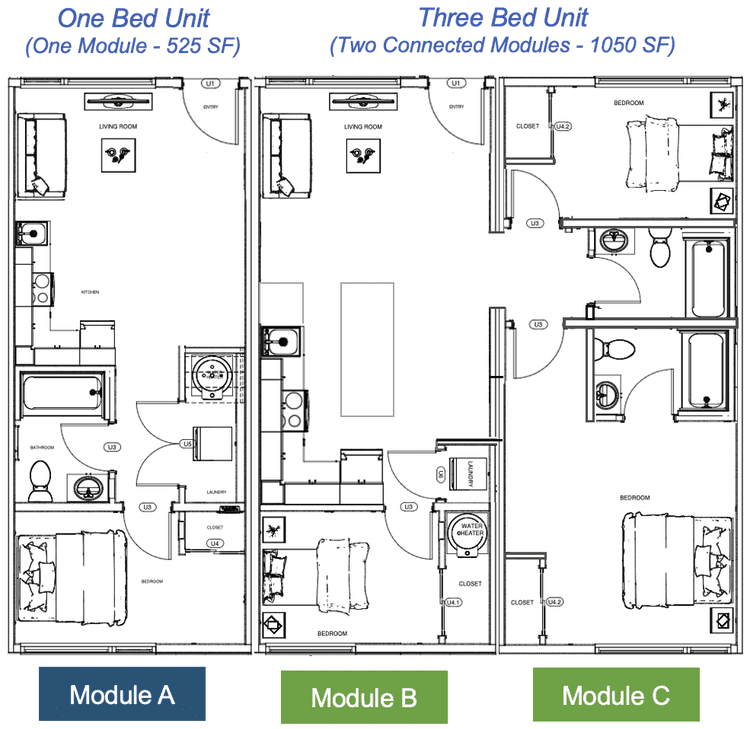
Our basic “building block” is a 35’ x 15’ wood-framed module.
-
One-bedroom units utilize one module (525 SF).
-
Two- or three-bedroom units utilize two modules (1050 SF) joined horizontally.
-
All units are ”double-sided” with outside doors and windows on both ends, optimizing natural light, cross-unit air flow, and energy efficiency.
-
These modules are fabricated in a factory with all mechanical systems installed and interiors completed, including flooring, cabinetry and appliances, before shipping to the site.
Flexible Configurations
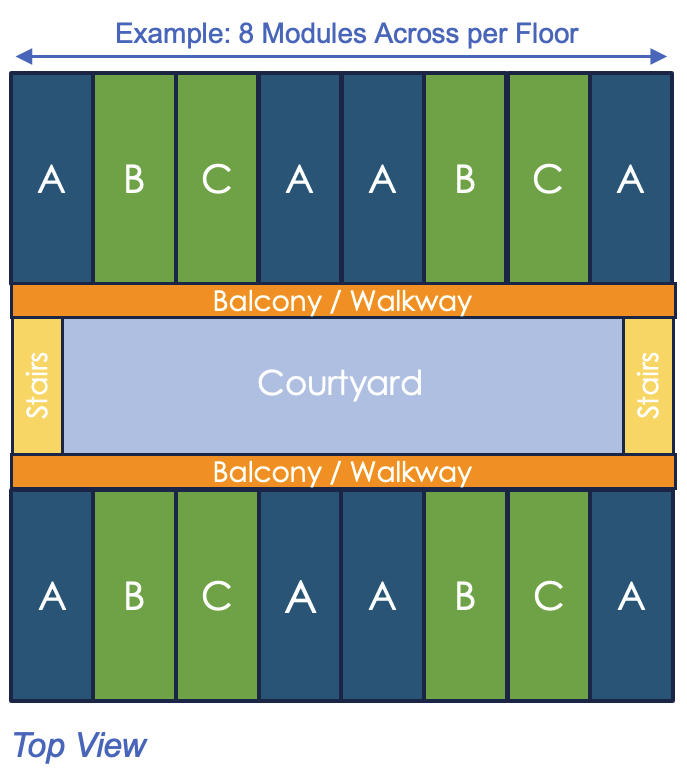
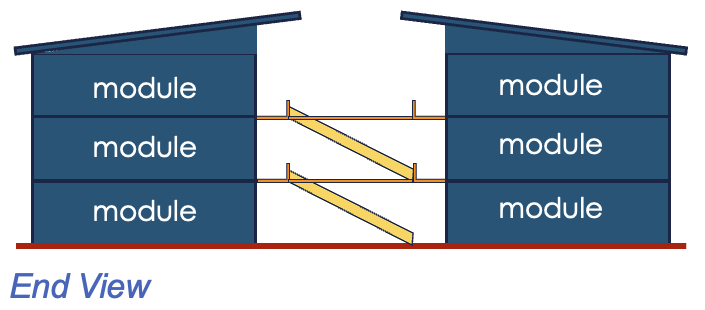
Modules can be flexibly combined to create a variety of building configurations, ranging from 2-to-5 stories tall and 5-to-10 modules wide, based on site limitations and market need.
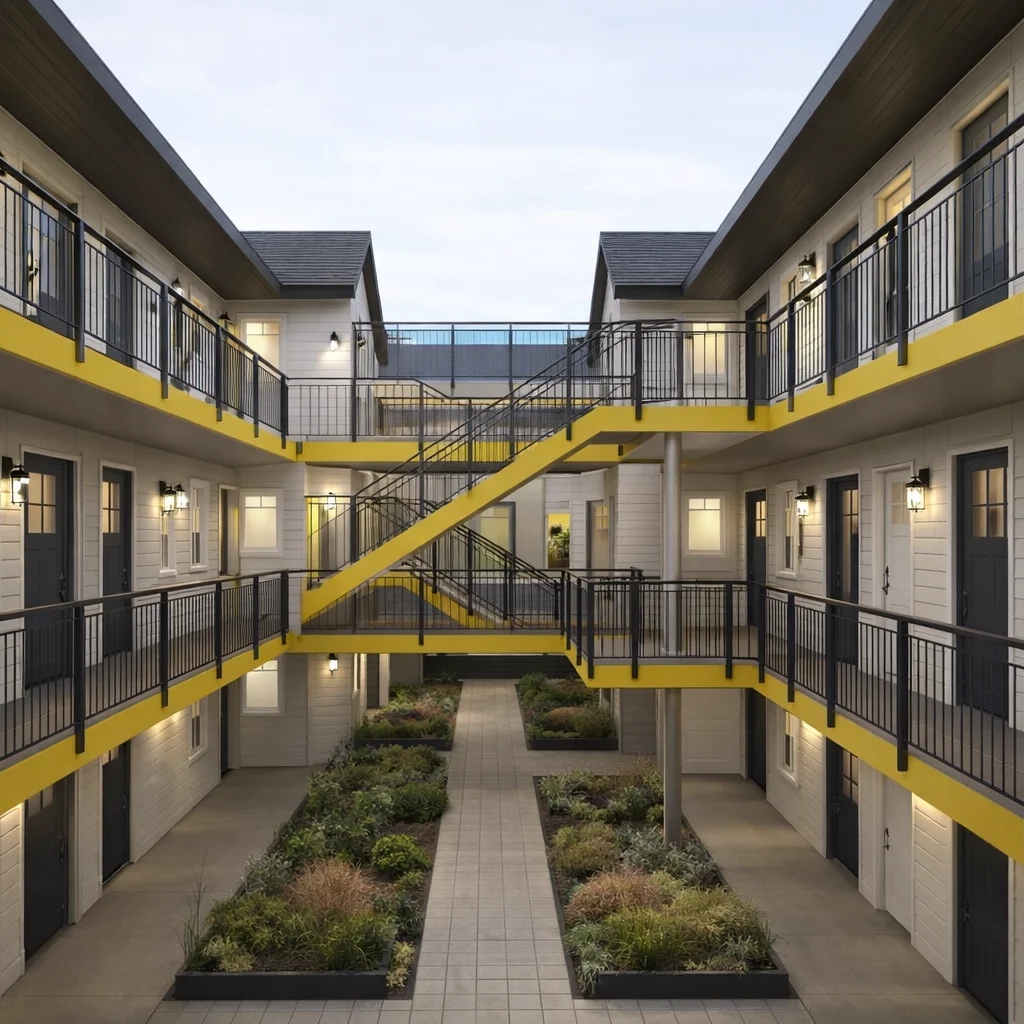
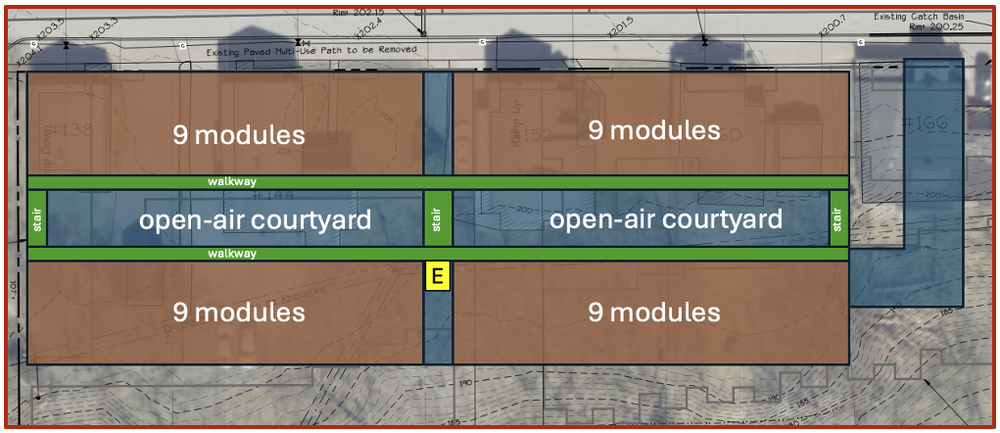
Our standard Pod template (rendering above) consists of independent buildings oriented to face a central open-air courtyard with external walkways and stairs connecting the buildings.
Alternatively, using the same building blocks, a single building could be constructed on a small infill site (minimum 0.3 acres) or multiple buildings clustered into a village complex for larger sites.
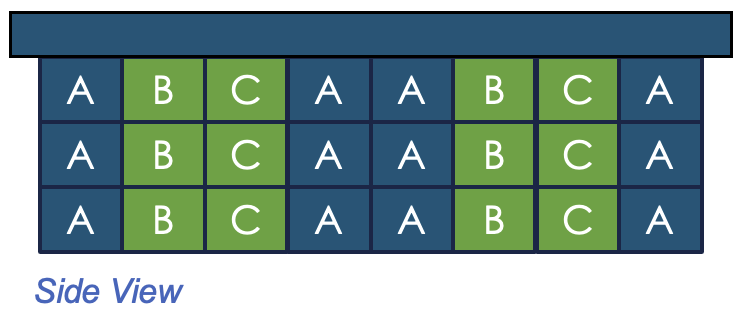
Each building can contain a mix of one-bedroom units (Module A) and two- or three-bedroom units (Modules B + C). The ratio of unit types can be varied based on final market demand analysis.
Tailored to a Site
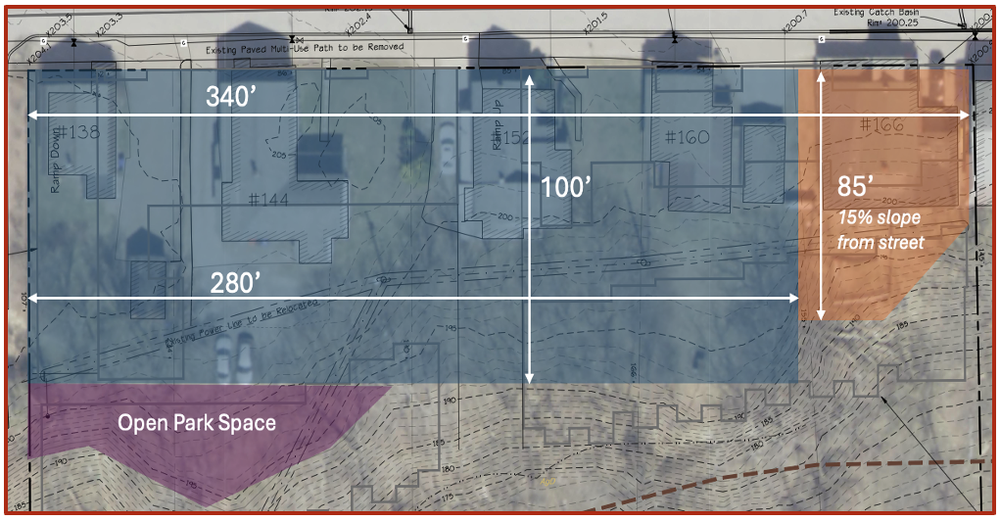
Many employers own parcels of land that are currently underutilized (vacant lots, parking lots, empty buildings) and may be ripe for redevelopment into housing.
The contribution of surplus land at below market prices to a workforce housing project drives down total project cost.
Our team can rapidly evaluate local zoning regulations and development standards to determine if a parcel has the opportunity to support workforce housing.
•We rapidly test-fit our standardized design template to potential development sites, defining the potential housing opportunity.
Many municipalities have evolving density regulations and tax incentives that support the development of workforce housing.
Rapid Cost Estimation
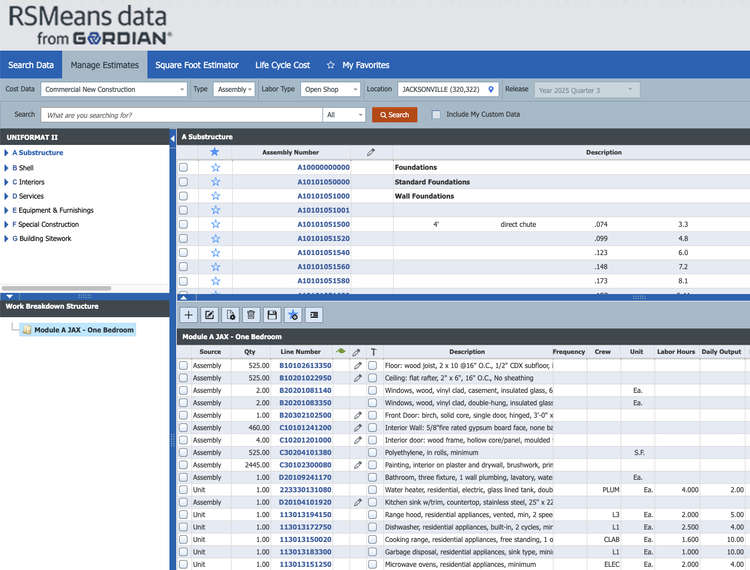
Our team leverages the industry standard RSMeans® construction cost estimation database to power our estimating toolkit.
Virtual models of each module are pre-built using the RSMeans® software allowing for construction takeoffs and detailed costing of each component.
As the schematic design is created using the templated kit-of-parts, the takeoffs for all modular components are combined to quickly create a total project cost estimate.
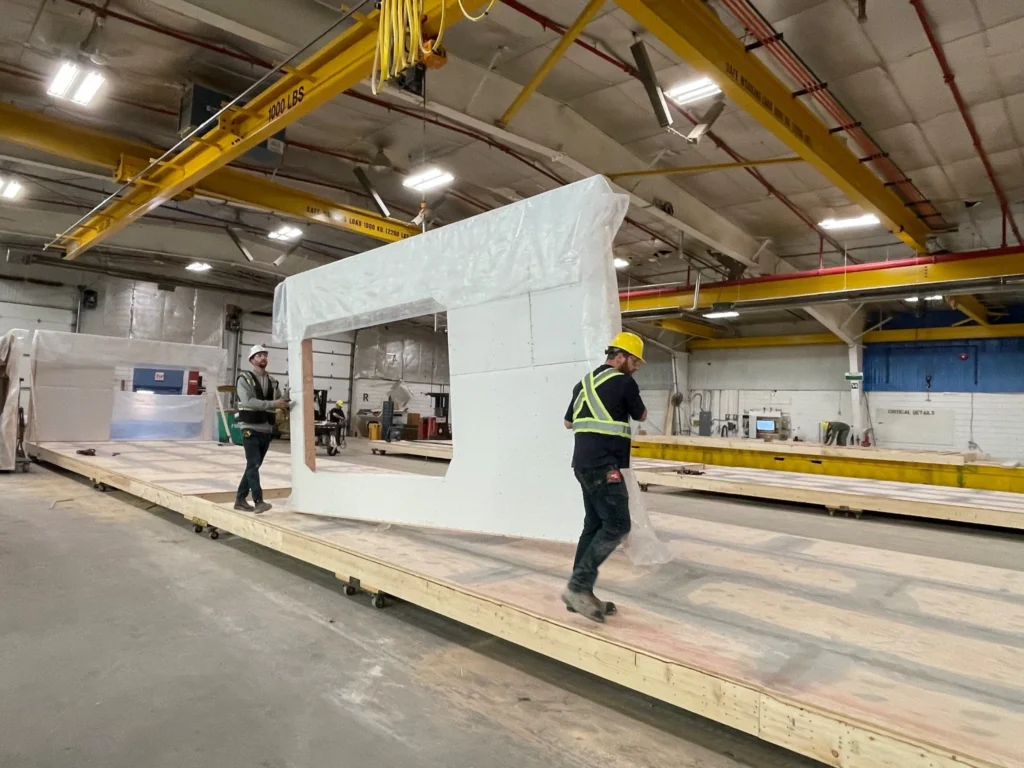
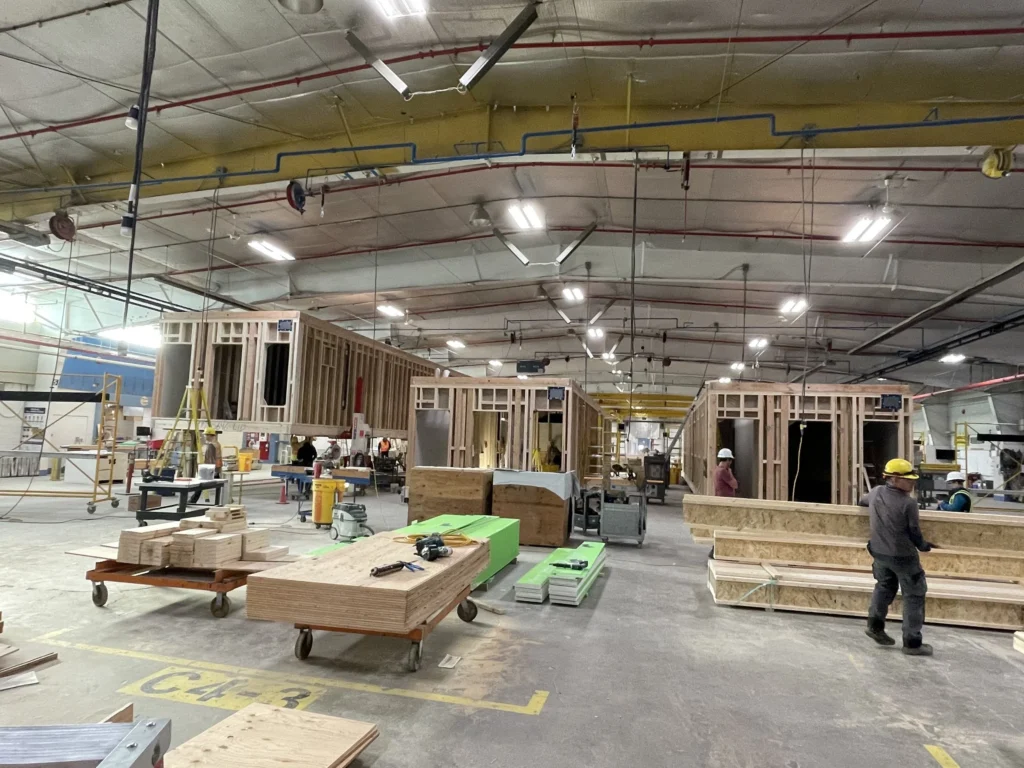
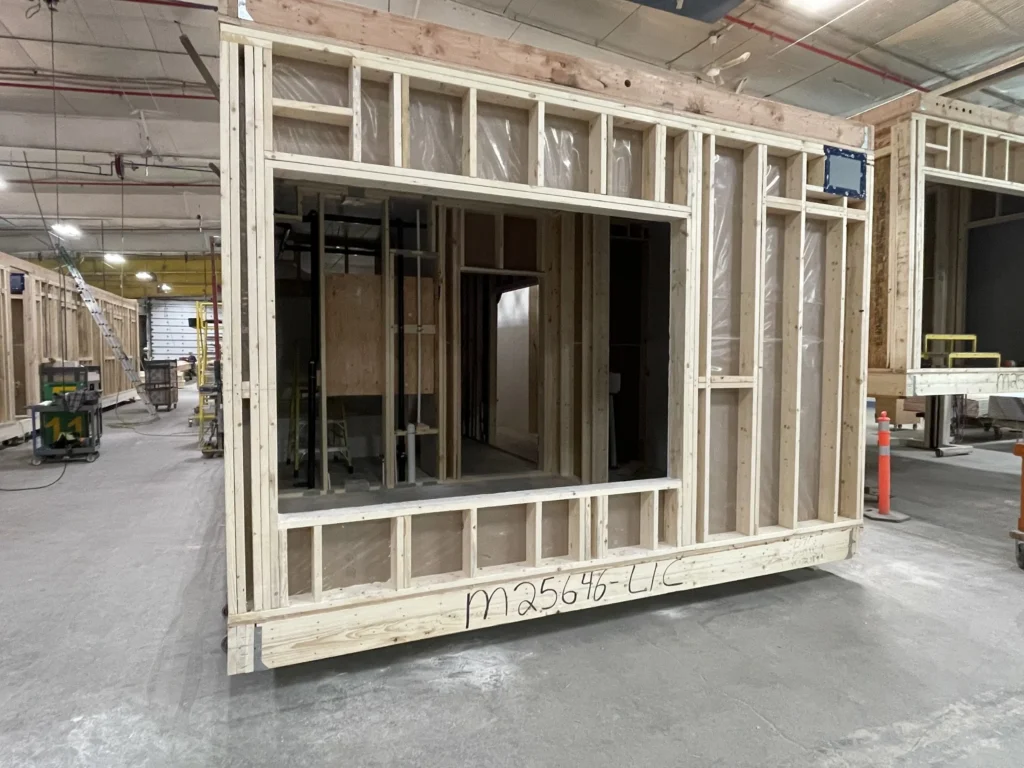
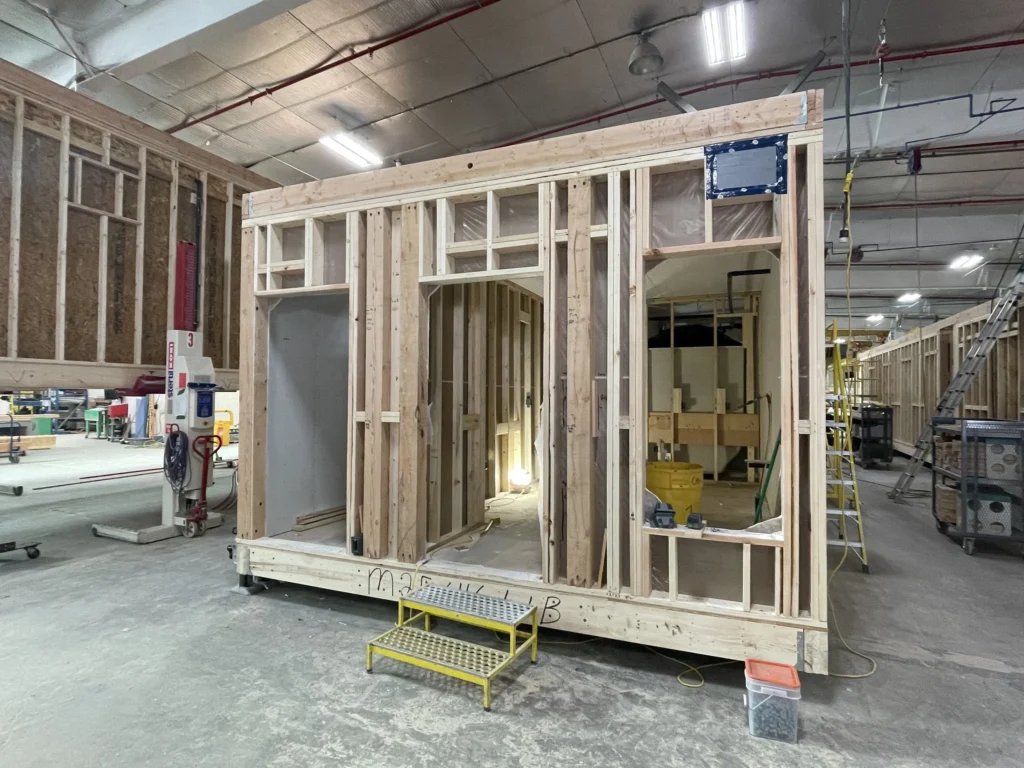
Module Fabrication
Modular construction allows site work to occur in parallel with the fabrication of modules in the factory, accelerating the development schedule.
Fabrication in of modules on a jig in a climate controlled environment improves quality and reduces material waste.
Improved engineering design has made the interconnection of modules more efficient decreasing total construction time.
Our objective is to continually push a higher percentage of work into the factory, allowing us to further accelerate the production process.
Stacking the Modules
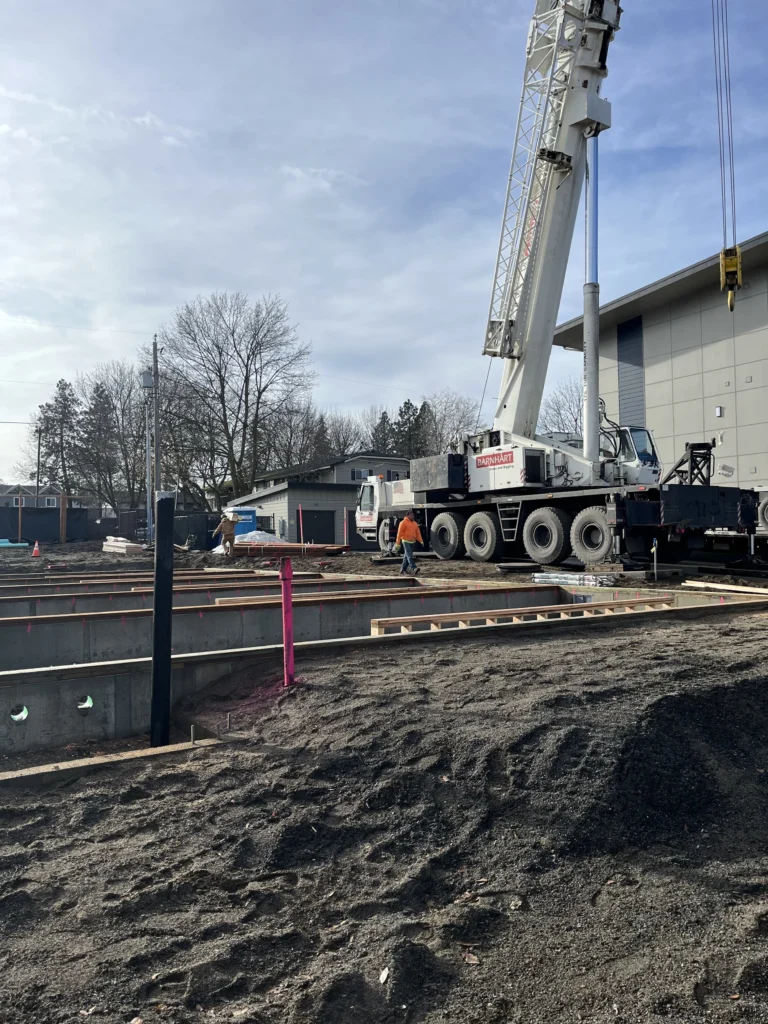
In parallel with the fabrication of the modules in the factory, site work is underway, with preparation of a standard concrete foundation and routing of major utilities.
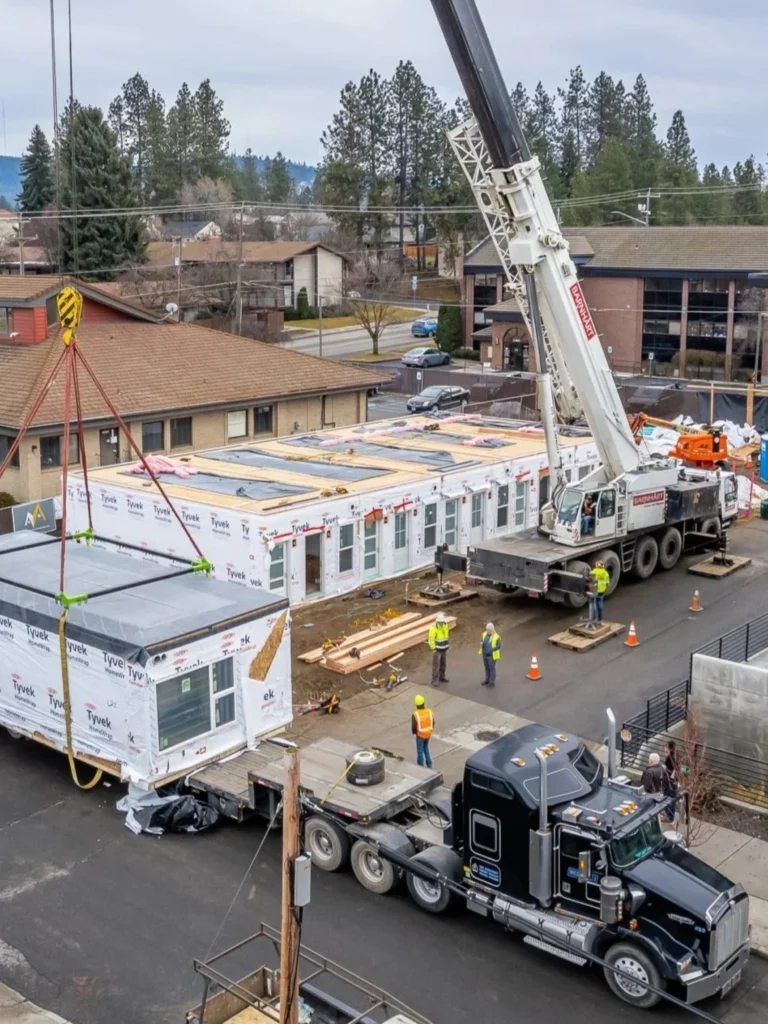
Once fabrication is completed, modules are transported by truck to the site and prepared to be set on the waiting foundation.
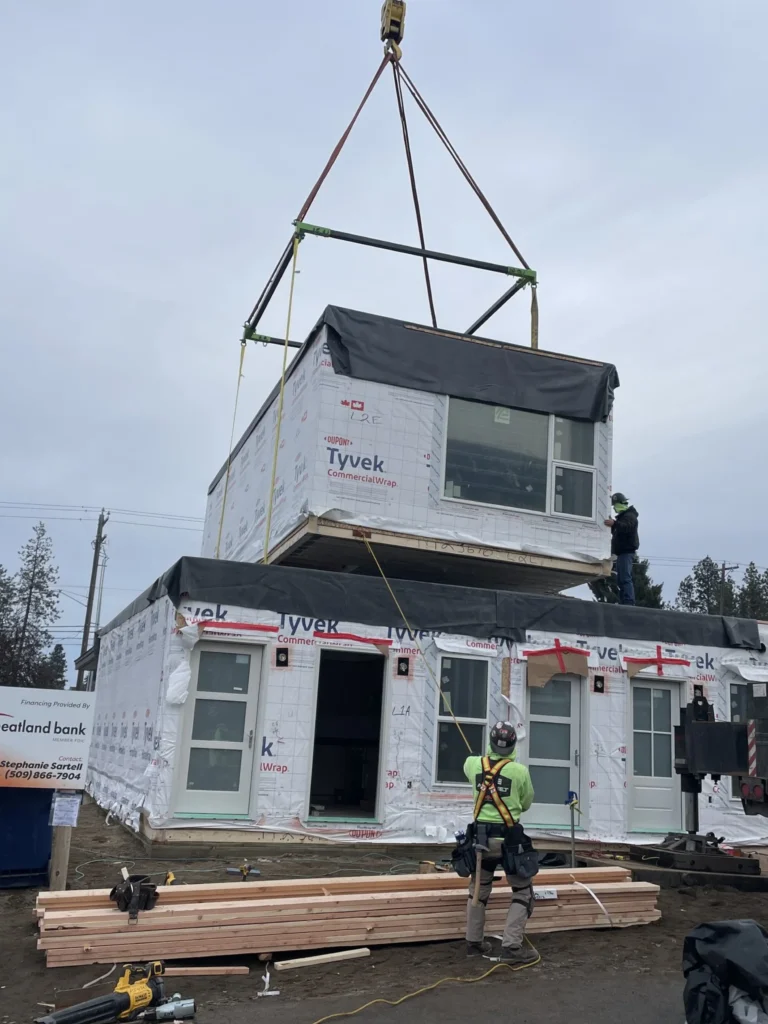
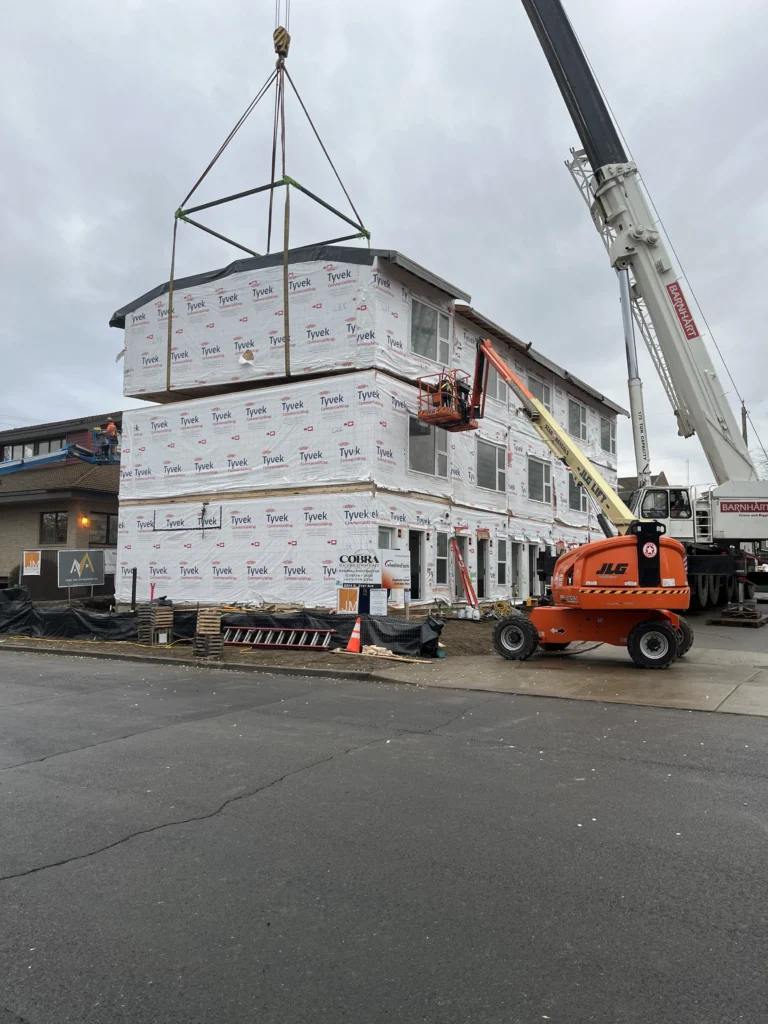
Modules are stacked by crane and snapped into place. Locking bolts tie the modules to the foundation and to adjacent modules.
At peak efficiency 15-20 modules can be set in a day.
Once all modules are set, final exterior finish work can be completed.